
A product story. Ready for launch.
Bring product photography, packaging concepts and retail campaigns into one connected creative direction.
Creative work, in context
From the pack to the placement.
Explore four ways to develop a packaged-food campaign: establish the product, refine its wording, adapt the format and change the occasion. Each example starts from a licensed photograph edited with Ideogram, around a fictional product.
Product launch
One product. A connected launch.
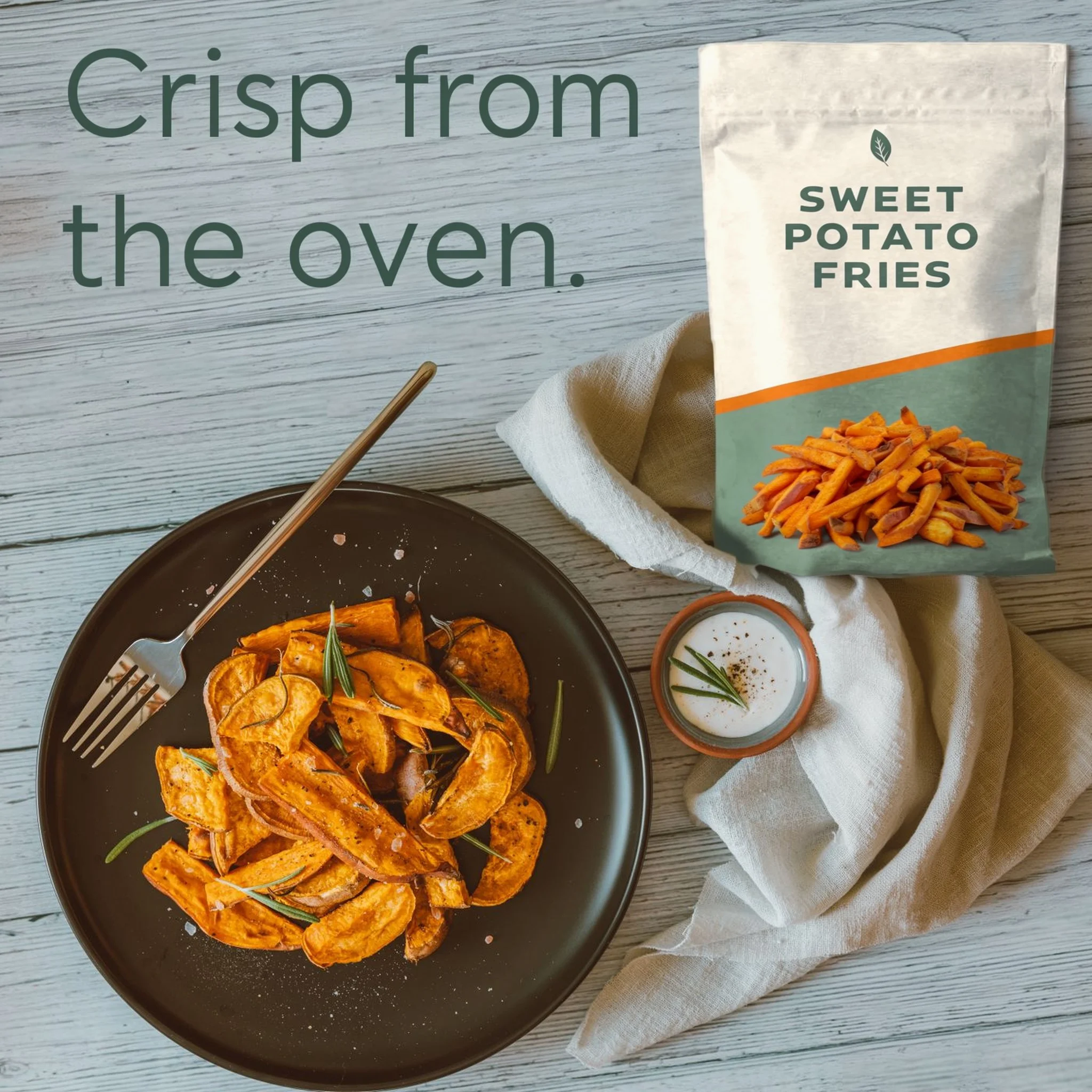
Start with a packaging concept, see it in a grocery freezer, then bring the same visual identity into a launch composition. Explore how the pack, serving image and headline work together.
Three connected concepts
Product concept
A printed pouch brings the product name, serving image and color palette together.
Packaging creative
Refine the words on the pack.
Compare “Sweet Potato Fries” with “Sweet Potato Wedges” across the visible pouch fronts. The freezer setting lets the team inspect the wording change within a retail concept.
Illustrative package wording on a fictional product.
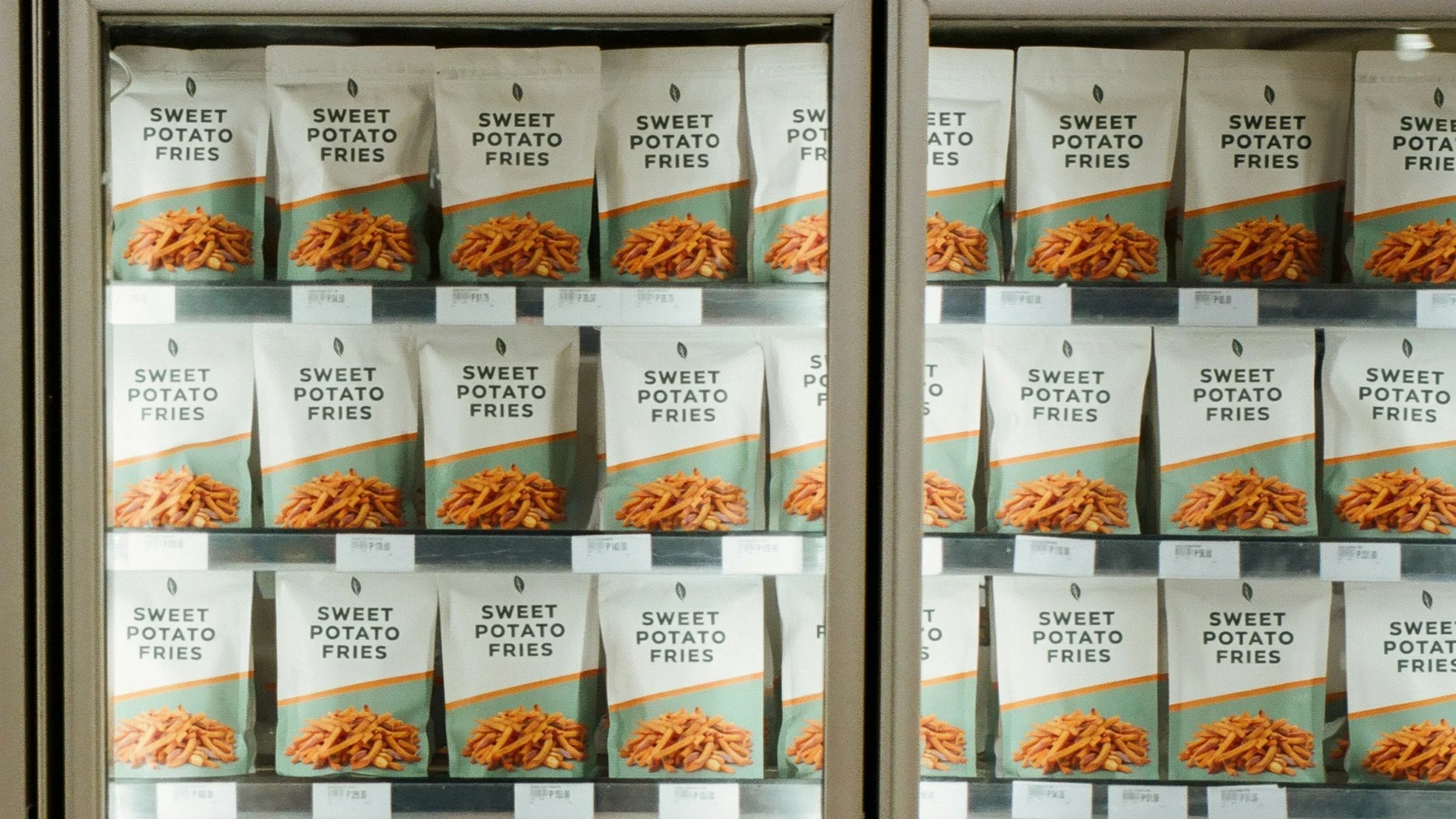
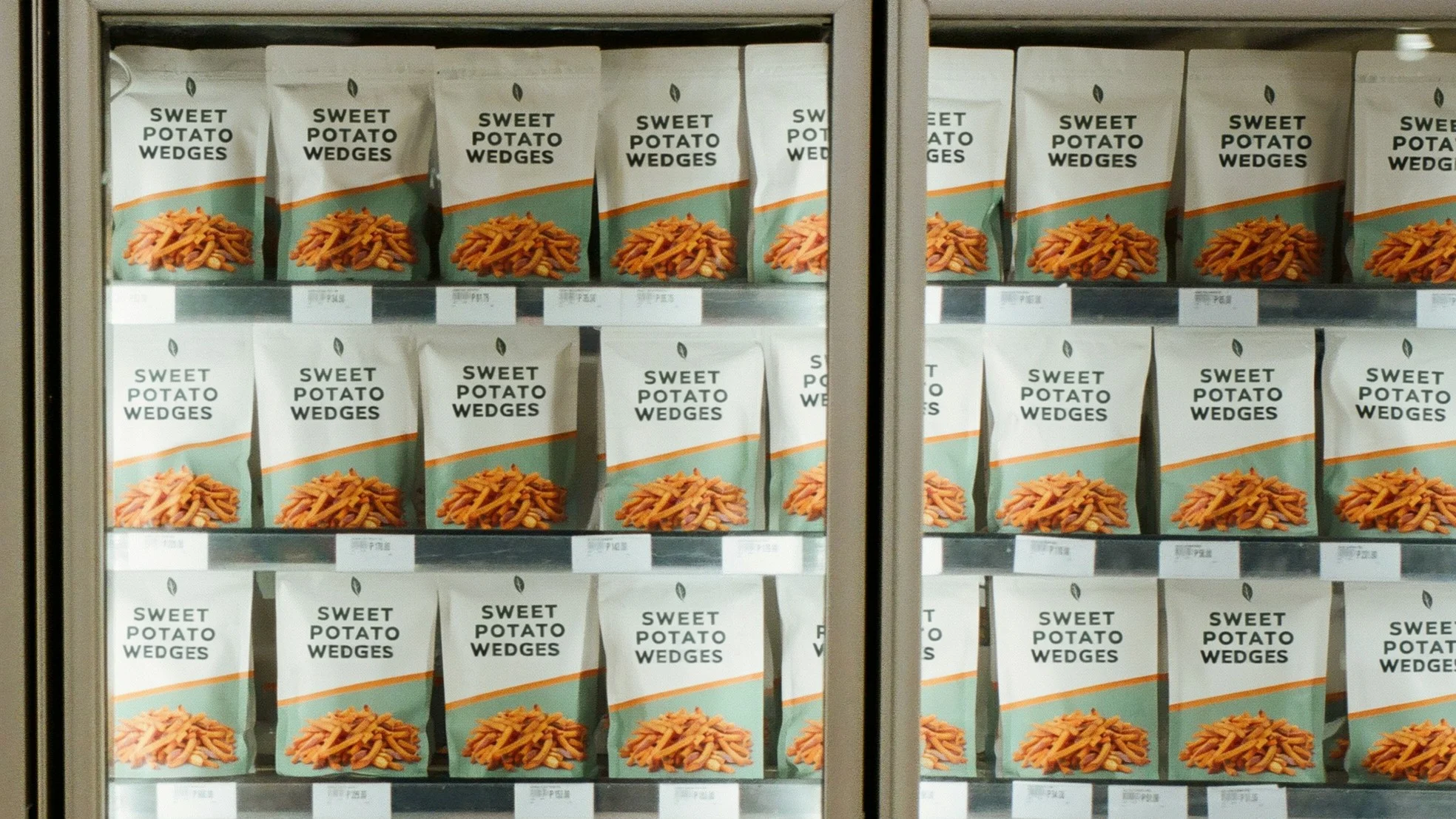
Drag the divider or use the arrow keys to compare.
Campaign formats
Give every placement its own composition.
Move between portrait, story, square and landscape. The food, pouch and headline are rearranged for each canvas, giving the same campaign direction room to work in different placements.
Explore the format adaptations
Portrait
The headline and pouch added to a licensed food photograph.
Seasonal campaigns
A familiar scene. A new occasion.
Take a family sharing moment into the festive season. Compare the lighting, decorations, headline and serving detail as the blanket-fort concept becomes a holiday campaign.
Both versions are edited from one licensed photograph.
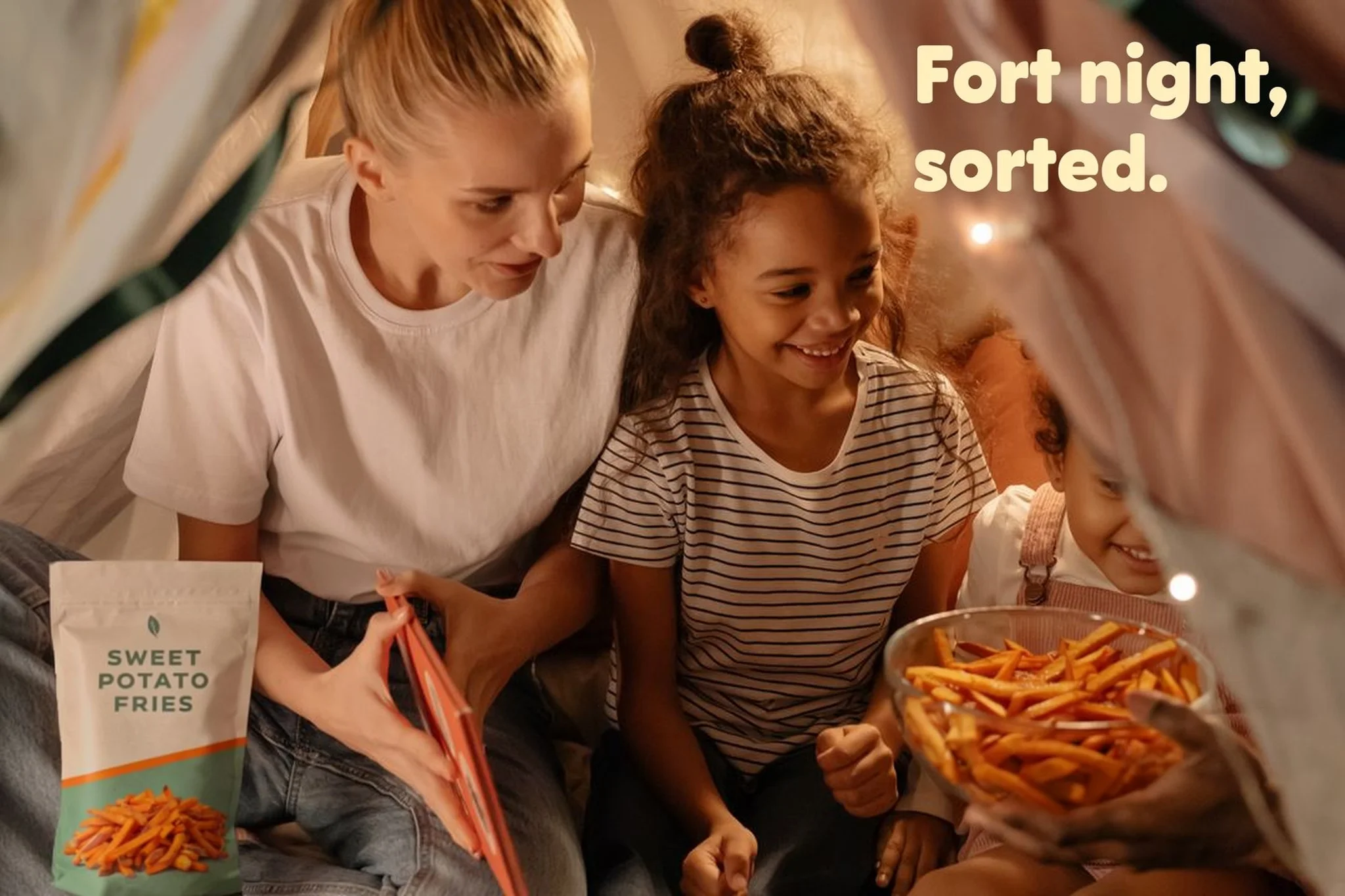
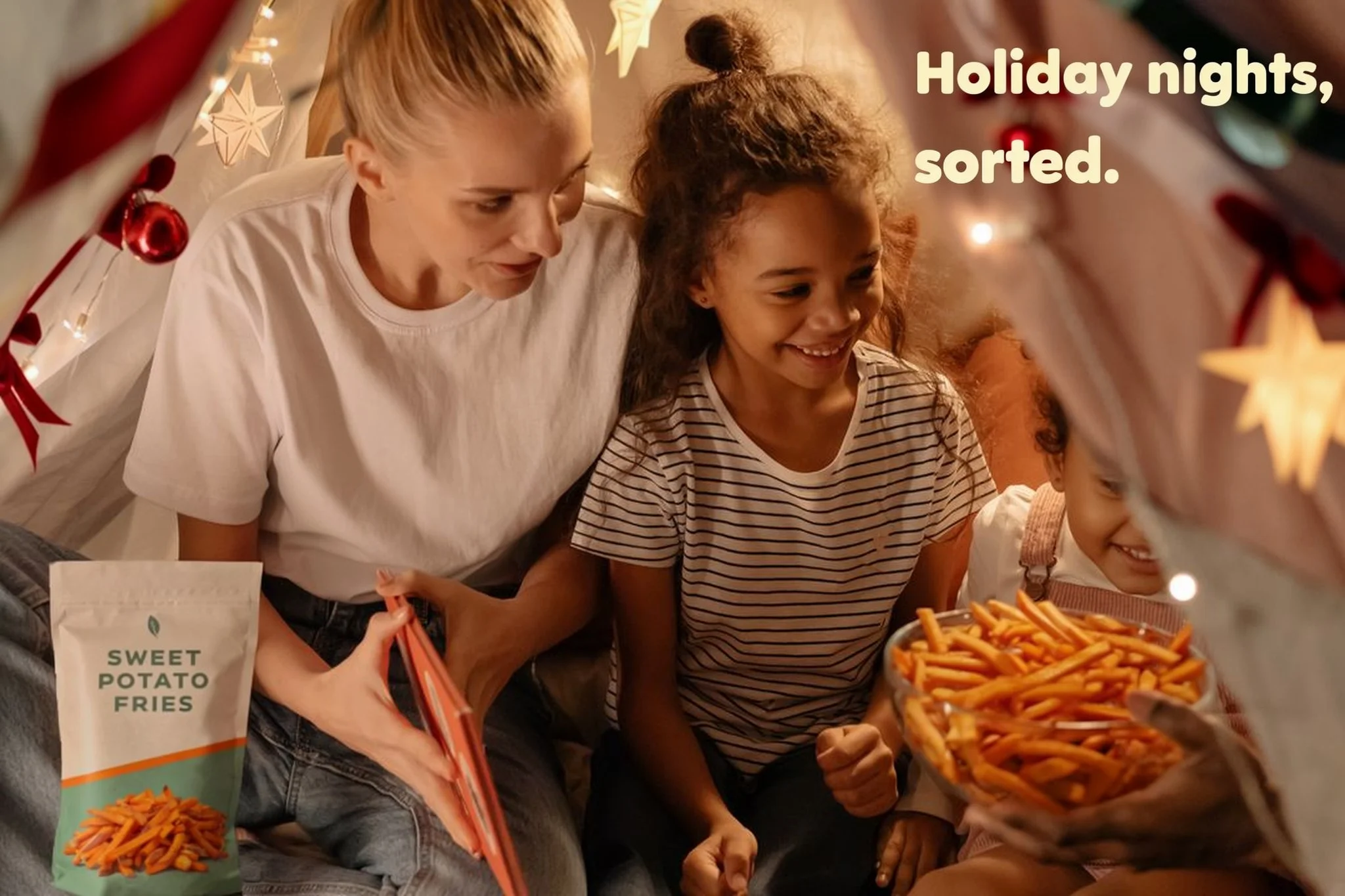
Drag the divider or use the arrow keys to compare.
Built around your team
Your creative standard.
A workflow to match.
Every step builds on your imagery, your references and the work your team needs to deliver.
- 01
Start with the product
Bring the pack, product imagery, visual references and campaign brief into the conversation.
- 02
Develop the direction
Explore product settings, compositions, wording and formats around a clear creative idea.
- 03
Review for the placement
Check product accuracy, package copy, serving details and typography before final production.
Frequently asked questions
What can a CPG creative team explore?
Product imagery, packaging concepts, retail placement visualizations and launch campaigns. The examples here focus on packaged food, with format and seasonal adaptations built around those concepts.
Are these finished customer campaigns?
No. Each example starts from a licensed stock photograph edited with Ideogram. The product, its packaging and the campaign wording are fictional, so package copy, product details and campaign messages need review before use.
How can we discuss our own product workflow?
Contact Sales to discuss your product imagery, creative requirements and campaign workflow with the Ideogram team.
More in Retail & Consumer Goods
Explore related industries.
Let's shape what comes next
Build your next product story.
Talk to our team about creative workflows for your products, retail placements and campaigns.